Confronting the Myth of the “Average Learner” through Universal Design using Astronomy
Educational planning traditionally defaults to a mythical “average learner,” forcing students who deviate from this arbitrary baseline to rely on retroactive accommodations. As the Inclusive Design Research Centre argues, assuming human variability as the normal starting condition transforms accessibility from an afterthought into a proactive structural design process (EDCI 335, 2023a). For my learning design blueprint, “The Diameters of the Planets in our Solar System,” expecting learner variability is crucial. Middle schoolers vary wildly in their mathematical competencies, spatial reasoning, and working memory capacities. Designing a static, one-size-fits-all lesson would inadvertently construct systemic learning barriers, especially when asking Grade 6–7 students to process massive numbers and scale factors.
Abstract Tech Network
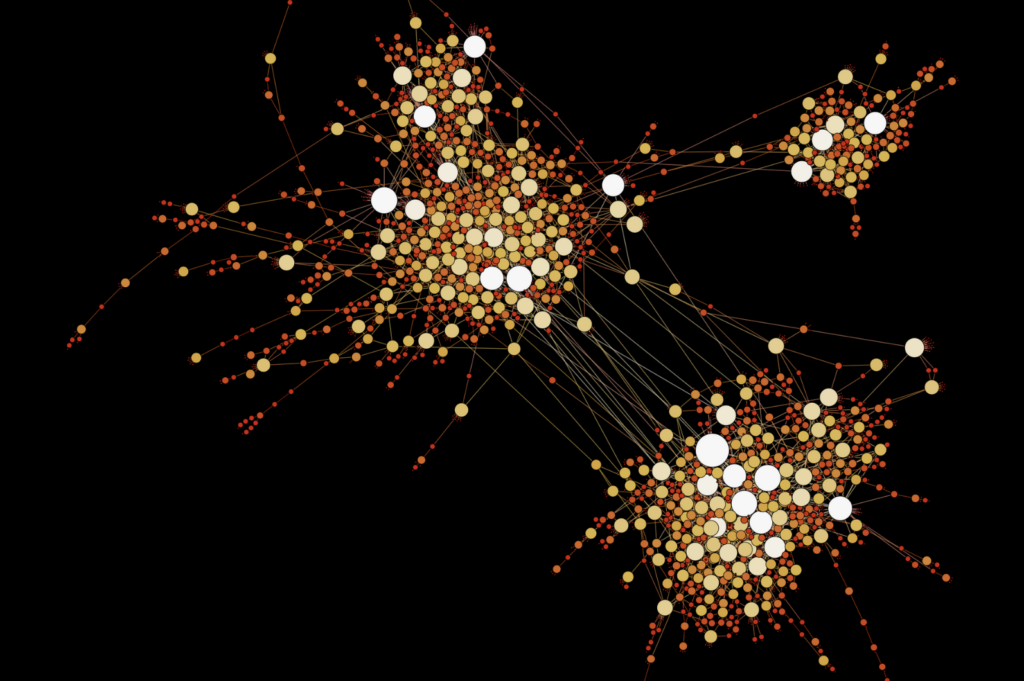
Figure 1
Visualizing diverse, non-linear cognitive learner networks.
Note. From Wikimedia Commons – Network Visualization File Page

To eliminate these barriers, my Google Sites module implements Universal Design for Learning (UDL) by focusing on the limitations of the design rather than the perceived limitations of the students (EDCI 335, 2023b). For example, a major hurdle in astronomy science is the intense cognitive load caused by raw mathematical dimensions. Rather than expecting an “average” reader to go through complex text, the module features a simplified “Cosmic Measurement Chart” that utilizes layered representation (Department of Physics and Astronomy at Douglas College & OpenStax, 2017). Students can engage with the data via a high-contrast localized text chart, visuals that stack Earth Units (EU) across a planet’s face, audio to compliment the visuals, and the ability to organize their understanding by means of interactive scaffolding (an interactive step-by-step framework to guide them towards the larger concept).
Planet Jupiter in Space
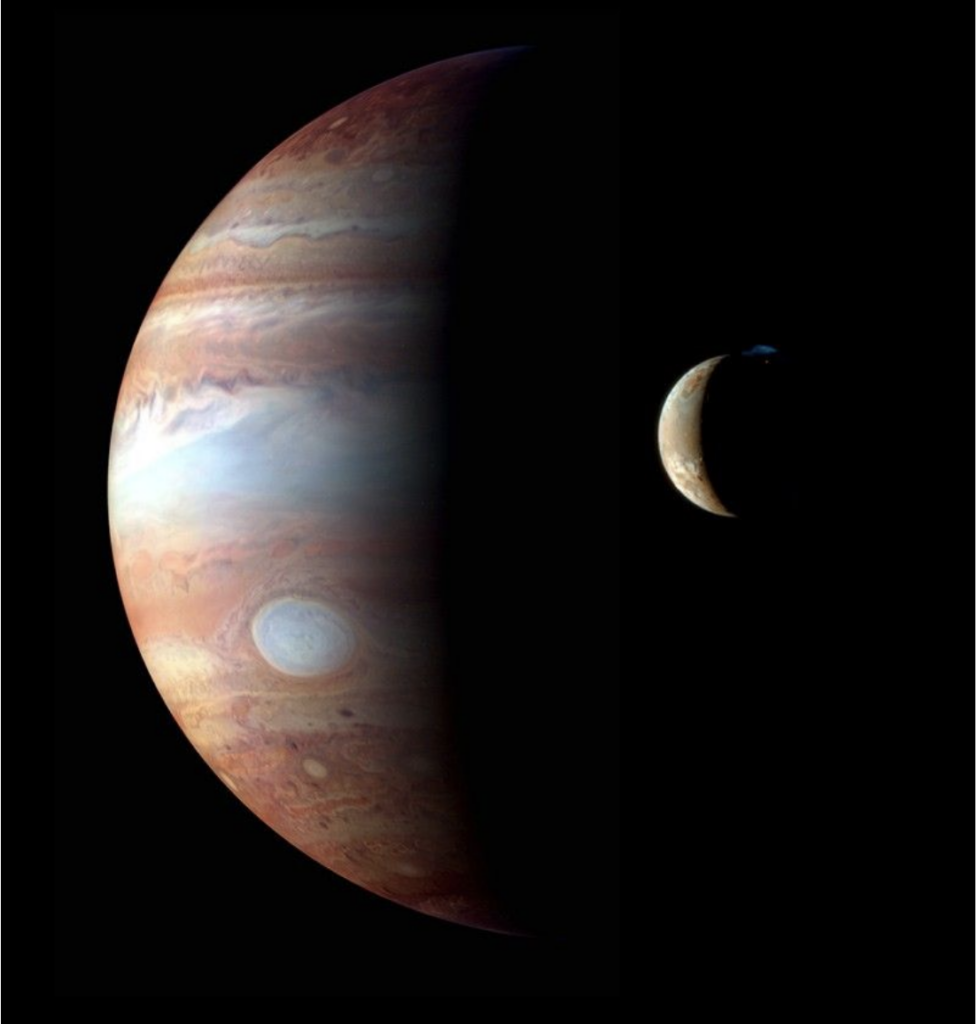
Figure 2
True atmospheric structures and authentic planetary scale.
Note. From NASA Science – Jupiter Near-Infrared Composite Asset Page.
This structural inclusivity mirrors the ideas explored by my classmates. In their post on the myth of standard grading, Sneh Duggal (2026) detailed how traditional systems prioritize a fictitious average student, hiding real human diversity behind rigid, standardized expectations. This directly supports my choice of experiential learning; building upon Sasha’s peer post from our previous unit, flexibility in hands-on exploration allows diverse minds to actively construct unique meaning instead of forcing them down a single linear pathway. By providing multiple pathways for engagement and representation, I’m hoping my blueprint can show that you can design systems that work for everyone’s different needs while avoiding the treatment of accessibility like a special favour added on later; you can build it right into the foundation from the very beginning.
Exploration of Spatial Scales
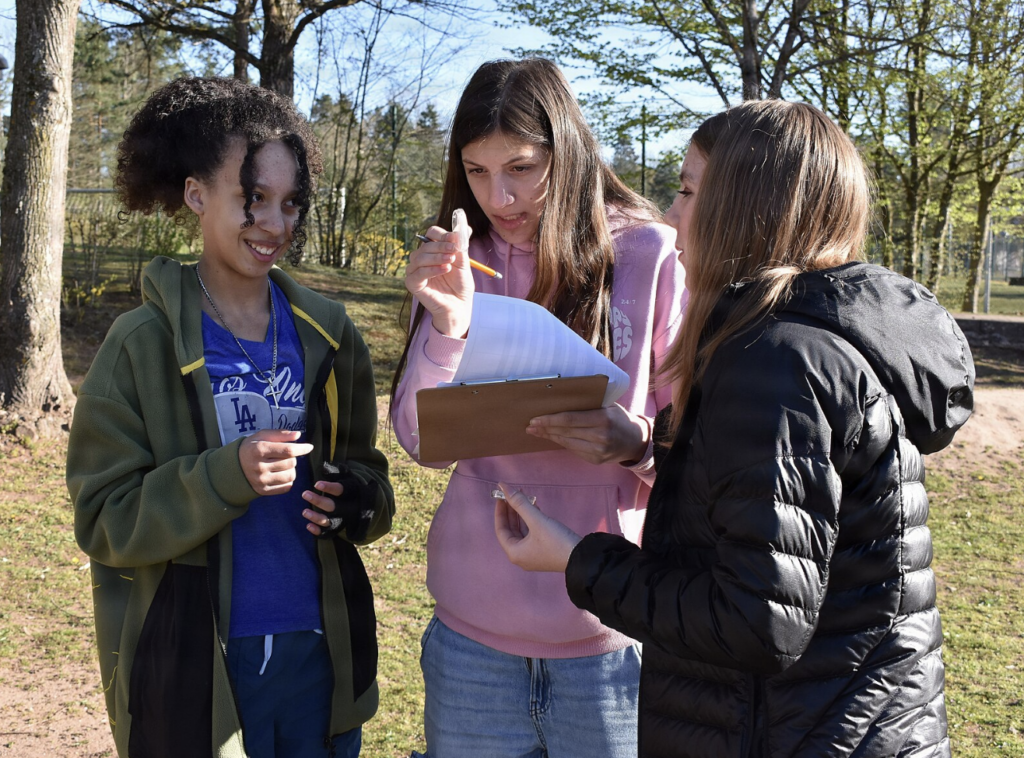
Figure 3
Middle school students actively interacting with collaborative science tools.
Note. From Wikimedia Commons – Ramstein Middle School Science Investigation Page.
.jpg)
References
Anugraheni, I., Gufron, A., & Purnomo, Y. W. (2025). The impact of realistic problem-based learning on mathematical connection abilities: Evidence from elementary schools in Indonesia. Cogent Education, 12(1). doi.org
Coştu, F., Özdemir, N. F., & Coştu, B. (2022). Revealing middle school students’ understanding of the universe: Alternative conceptions of scale and size. Journal of Education in Science, Environmental and Health, 8(4), 312-326. ed.gov
Department of Physics and Astronomy at Douglas College & OpenStax. (2017). Douglas College Astronomy 1105. BCcampus Open Education. bccampus.ca
Duggal, S. (2026, June 6). Blog Post #3- Prompt 6: Where do you see the idea of the “average learner” shaping educational design? Sneh’s EDCI 335 Blog. https://snehduggal.opened.ca/2026/06/06/blog-post-3-prompt-6-where-do-you-see-the-idea-of-the-average-learner-shaping-educational-design/
EDCI 335. (2023a). Inclusive learning design. Learning Design for Technology-Mediated Environments. edtechuvic.ca
EDCI 335. (2023b). Universal design. Learning Design for Technology-Mediated Environments. edtechuvic.ca
Martin, F. (2021). Network visualization [Digital graphic]. Wikimedia Commons. https://commons.wikimedia.org/wiki/File:Network_Visualization.png
National Aeronautics and Space Administration. (2007). Jupiter and Io [Photograph]. NASA Science. https://science.nasa.gov/resource/jupiter-and-io/
Price, A., Lee, H., Malatesta, K., & SubbaRao, M. (2017). Learning about the scale of the solar system using digital planetarium visualizations and physical scaling. American Journal of Physics, 85(7), 550-559. doi.org
U.S. Army Corps of Engineers Europe District. (2013). Ramstein students become environmental detectives for a day [Photograph]. Wikimedia Commons. https://commons.wikimedia.org/wiki/File:Ramstein_Students_Become_Environmental_Detectives_for_a_Day_(9628644).jpg
Recent Comments