Month: June 2026

EDCI 335: Blog Post #4

Integrating dynamic media elements into interactive lessons allows educators to transform passive content consumption into active, relational conceptualization. Building on the interactive Google Sites framework from my Blog Post #2 and the multi-modal universal design scaffolds from Blog Post #3, I selected the Khan Academy Scale of Earth and Sun Video to explicitly expose textbook size distortions. Educational alignment requires that learning tools directly reinforce our target curricular fusion: bridging BC Science 6 celestial scale concepts with Math 6/7 geometric spatial reasoning.

Inherent and Learner-Generated Interaction (Prompts 1 & 2)

The video relies heavily on relational, mathematical scales. This structure lacks immediate inherent interaction because the raw broadcast format does not halt playback to demand student inputs. To bypass this baseline constraint, the video functions as a catalyst for learner-generated interaction. Middle school students can naturally pause the stream, sketch physical diameter line-ups, and make comparative notes. Bates (2022) explains in Teaching in a Digital Age Chapter 10.6 that an educational video’s real pedagogical power lies in its capacity to challenge structural mental models. It forces learners to actively process real-world spatial configurations rather than consuming data passively.

Post-Video Extension and Formative Feedback (Prompts 3 & 4)

Following the media segment, students complete a digital follow-up task titled “Ranking the Planets.” Using the interactive tools on the Google Sites platform, students apply mathematical scale factors. They transform planetary dimensions into local, regional, and national units, comparing various sizes building up to ratios used against the landmass of Canada. This applied task matches the frameworks explored by Kaur (2026). Her work proved that pairing focused instructional video clips with contextual data tracking anchors abstract mathematical relationships to realistic concrete frameworks.

To evaluate this task, students would receive feedback through interactive real-time marking; Google Sites allows for preset answers to be given based on the outcome of the learner’s interaction. These results can then be recorded for future reference. This medium allows peers to review each other’s spatial understandings and identify scaling anomalies, while an instructor can provide immediate feedback on spatial calibration errors referencing the results of the preset answers.

Inclusive Design and Spatial Accessibility (Prompt 7)

To address systemic learning barriers, the video is wrapped in a multi-modal delivery structure. The framework includes native closed captions, variable playback speeds, and a complete text transcript. These adjustments decrease working memory stress. They provide critical pacing flexibility for students building foundational mathematical competencies. By providing these forms of accessible pathways, my module would be able to accommodate human variability natively and eliminate the need for retroactive learning adjustments.
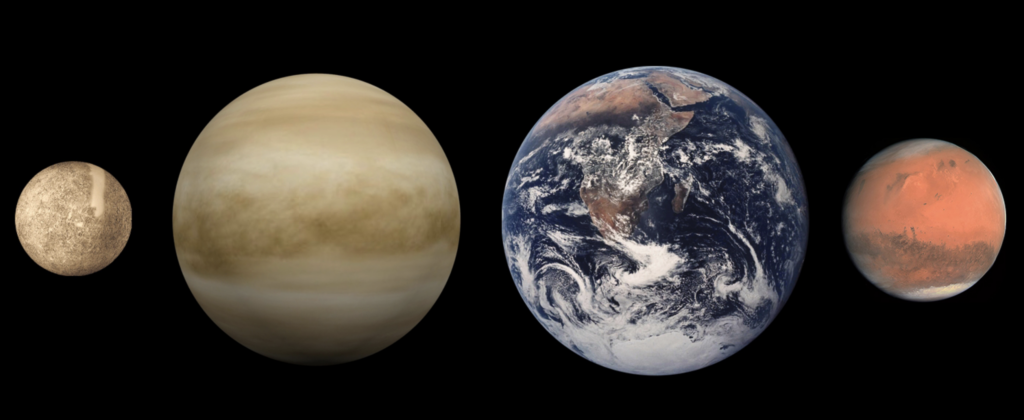
Figure 1
Terrestrial Planet Size Comparisons.
Note. From Wikimedia Commons Asset Landing Page. In the public domain.

References

Bates, A. W. (2022). Chapter 10.6: Interaction. In Teaching in a Digital Age (3rd ed.). BCcampus. bccampus.ca

Kaur, M. (2026, June 20). Blogpost 4 : Using Video for Interaction. Manveen Kaur’s EDCI 335 Blog. https://manv.opened.ca/blogpost-4-using-video-for-interaction/

Khan Academy. (n.d.). Scale of Earth and Sun [Video]. Cosmology and Astronomy. khanacademy.org

NASA. (2006). Terrestrial planet size comparisons [Digital graphic]. Wikimedia Commons. wikimedia.org
EDCI 335: Blog Post #3

Confronting the Myth of the “Average Learner” through Universal Design using Astronomy

Educational planning traditionally defaults to a mythical “average learner,” forcing students who deviate from this arbitrary baseline to rely on retroactive accommodations. As the Inclusive Design Research Centre argues, assuming human variability as the normal starting condition transforms accessibility from an afterthought into a proactive structural design process (EDCI 335, 2023a). For my learning design blueprint, “The Diameters of the Planets in our Solar System,” expecting learner variability is crucial. Middle schoolers vary wildly in their mathematical competencies, spatial reasoning, and working memory capacities. Designing a static, one-size-fits-all lesson would inadvertently construct systemic learning barriers, especially when asking Grade 6–7 students to process massive numbers and scale factors.

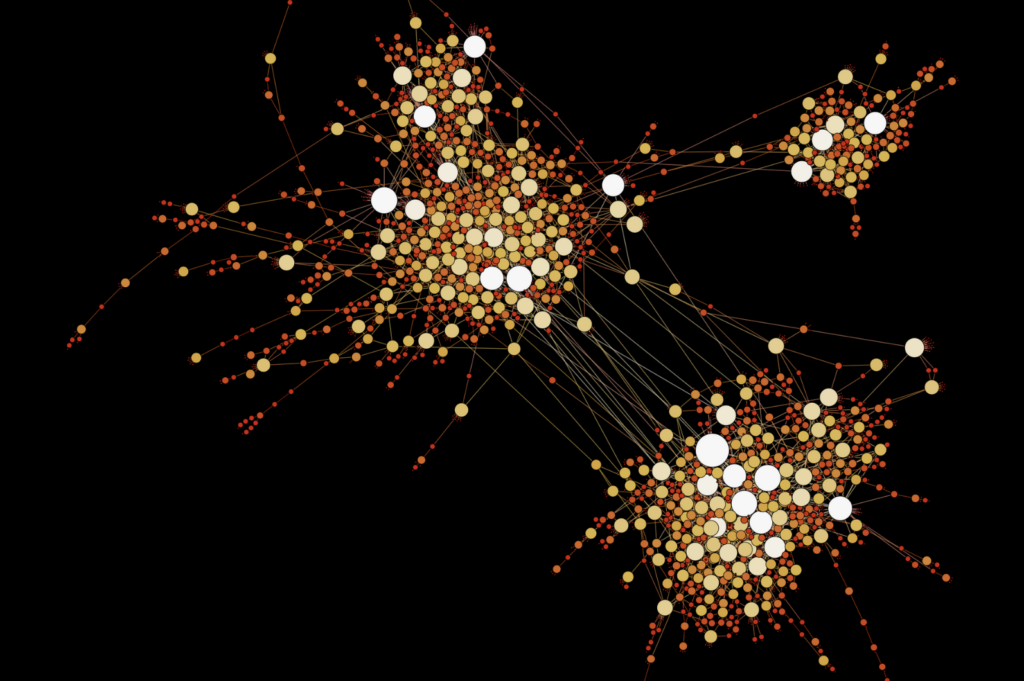
Abstract Tech Network

Figure 1
Visualizing diverse, non-linear cognitive learner networks.
Note. From Wikimedia Commons – Network Visualization File Page

To eliminate these barriers, my Google Sites module implements Universal Design for Learning (UDL) by focusing on the limitations of the design rather than the perceived limitations of the students (EDCI 335, 2023b). For example, a major hurdle in astronomy science is the intense cognitive load caused by raw mathematical dimensions. Rather than expecting an “average” reader to go through complex text, the module features a simplified “Cosmic Measurement Chart” that utilizes layered representation (Department of Physics and Astronomy at Douglas College & OpenStax, 2017). Students can engage with the data via a high-contrast localized text chart, visuals that stack Earth Units (EU) across a planet’s face, audio to compliment the visuals, and the ability to organize their understanding by means of interactive scaffolding (an interactive step-by-step framework to guide them towards the larger concept).

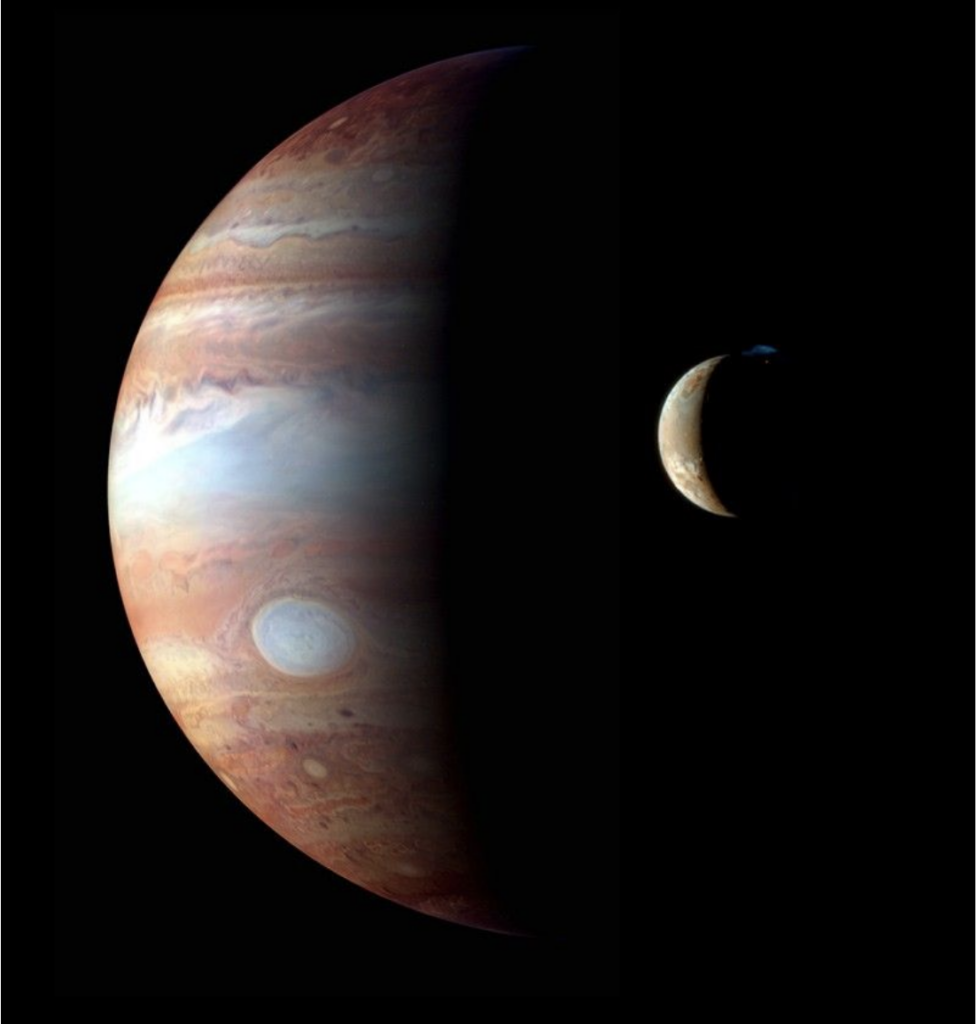
Planet Jupiter in Space

Figure 2
True atmospheric structures and authentic planetary scale.
Note. From NASA Science – Jupiter Near-Infrared Composite Asset Page.

This structural inclusivity mirrors the ideas explored by my classmates. In their post on the myth of standard grading, Sneh Duggal (2026) detailed how traditional systems prioritize a fictitious average student, hiding real human diversity behind rigid, standardized expectations. This directly supports my choice of experiential learning; building upon Sasha’s peer post from our previous unit, flexibility in hands-on exploration allows diverse minds to actively construct unique meaning instead of forcing them down a single linear pathway. By providing multiple pathways for engagement and representation, I’m hoping my blueprint can show that you can design systems that work for everyone’s different needs while avoiding the treatment of accessibility like a special favour added on later; you can build it right into the foundation from the very beginning.

Exploration of Spatial Scales

Figure 3
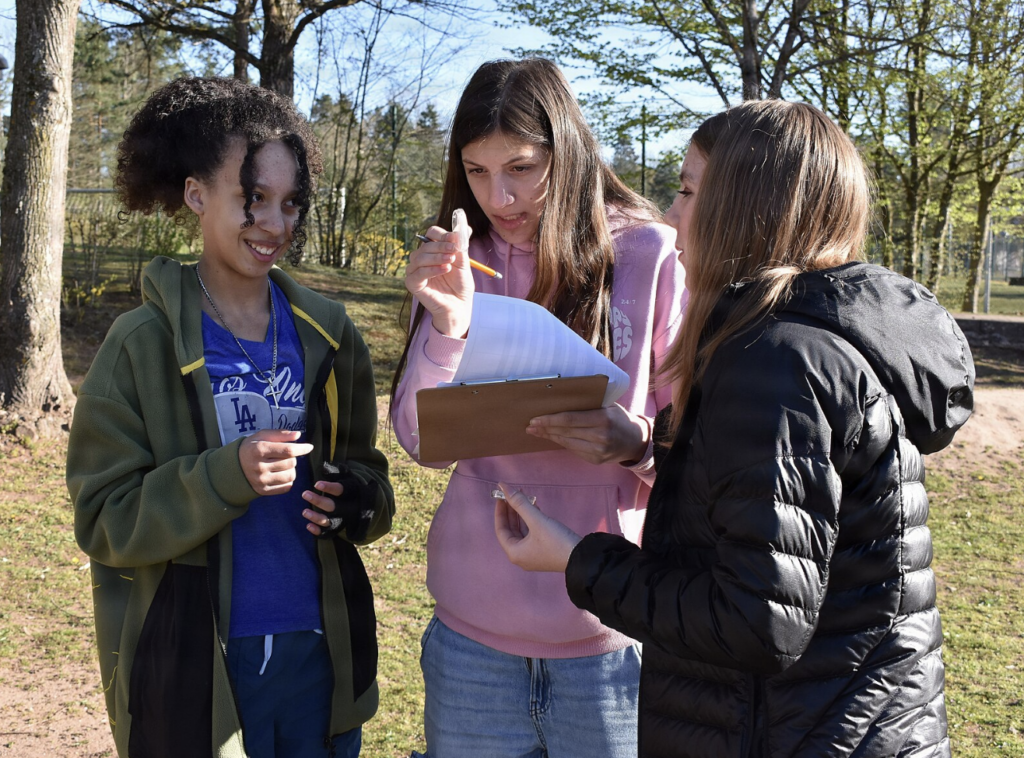
Middle school students actively interacting with collaborative science tools.
Note. From Wikimedia Commons – Ramstein Middle School Science Investigation Page.

References

Anugraheni, I., Gufron, A., & Purnomo, Y. W. (2025). The impact of realistic problem-based learning on mathematical connection abilities: Evidence from elementary schools in Indonesia. Cogent Education, 12(1). doi.org

Coştu, F., Özdemir, N. F., & Coştu, B. (2022). Revealing middle school students’ understanding of the universe: Alternative conceptions of scale and size. Journal of Education in Science, Environmental and Health, 8(4), 312-326. ed.gov

Department of Physics and Astronomy at Douglas College & OpenStax. (2017). Douglas College Astronomy 1105. BCcampus Open Education. bccampus.ca

Duggal, S. (2026, June 6). Blog Post #3- Prompt 6: Where do you see the idea of the “average learner” shaping educational design? Sneh’s EDCI 335 Blog. https://snehduggal.opened.ca/2026/06/06/blog-post-3-prompt-6-where-do-you-see-the-idea-of-the-average-learner-shaping-educational-design/

EDCI 335. (2023a). Inclusive learning design. Learning Design for Technology-Mediated Environments. edtechuvic.ca

EDCI 335. (2023b). Universal design. Learning Design for Technology-Mediated Environments. edtechuvic.ca

Martin, F. (2021). Network visualization [Digital graphic]. Wikimedia Commons. https://commons.wikimedia.org/wiki/File:Network_Visualization.png

National Aeronautics and Space Administration. (2007). Jupiter and Io [Photograph]. NASA Science. https://science.nasa.gov/resource/jupiter-and-io/

Price, A., Lee, H., Malatesta, K., & SubbaRao, M. (2017). Learning about the scale of the solar system using digital planetarium visualizations and physical scaling. American Journal of Physics, 85(7), 550-559. doi.org

U.S. Army Corps of Engineers Europe District. (2013). Ramstein students become environmental detectives for a day [Photograph]. Wikimedia Commons. https://commons.wikimedia.org/wiki/File:Ramstein_Students_Become_Environmental_Detectives_for_a_Day_(9628644).jpg

EDCI 335: Blog Post #2

Unmasking Cosmic Distortion: Experiential Scaling in Middle School Space Science

Textbook curriculums frequently rely on visual distortions to squeeze our vast solar system onto a single page, not knowingly creating deep spatial misconceptions leading to middle schoolers assuming planetary diameters are uniform (Coştu et al., 2022; Price et al., 2017). Furthermore, due to an egocentric bias from Earth’s surface, young learners assume the Earth, Moon, and Sun are roughly comparable in size (Baybars, 2018). For my individual learning design blueprint, “The Diameters of the Planets in our Solar System,” relying on direct instruction would fail to challenge these faulty mental models. Instead, an applied learning framework turns abstract numbers into tangible terms by encouraging students to adapt their mental models through active reflection and physical manipulation. Traditional methods fail to help learners link abstract concepts to real-world contexts, but context-driven applied tasks effectively bridge the gap between mathematical procedures and physical reality (Anugraheni et al., 2025).

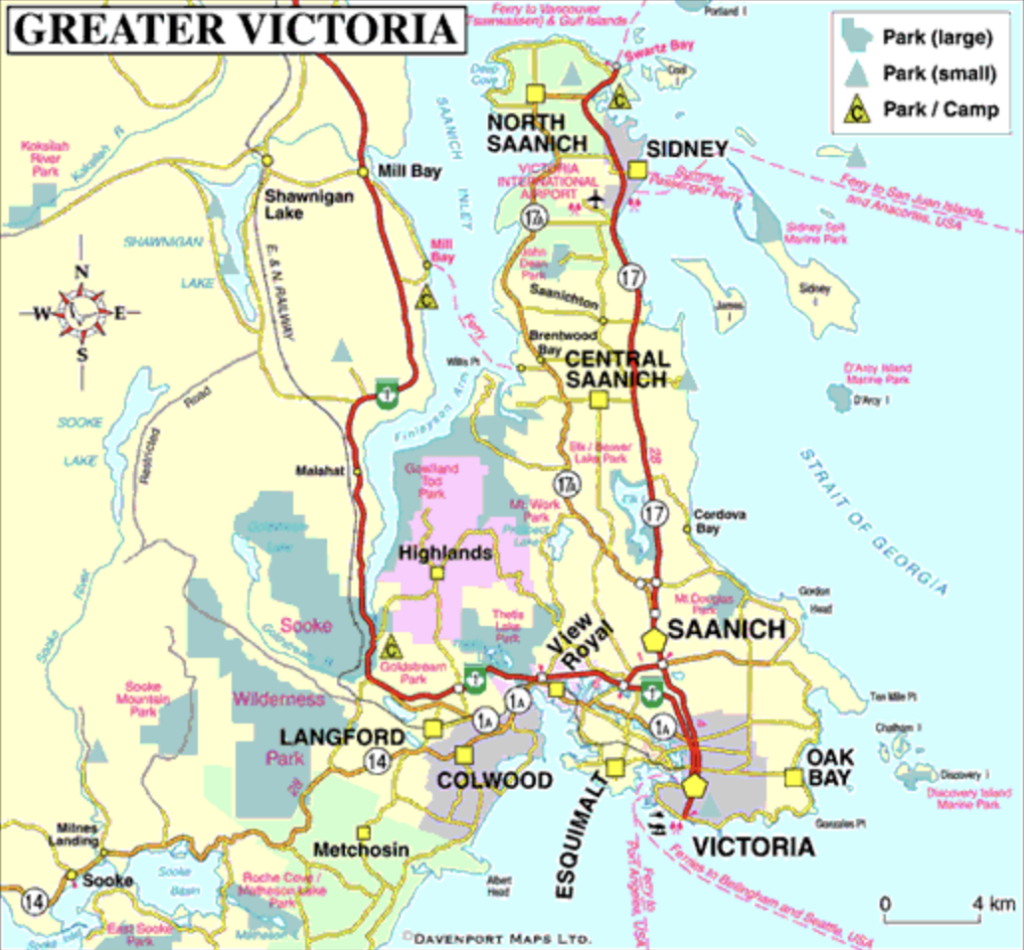
Geographic Scaling Baseline

Figure 1
Greater Victoria Map
Note. From Greater Victoria Map [Map], by Vancouver Island Travel, 2013, VancouverIsland.com (vancouverisland.com). Copyright 2013 by Vancouver Island Travel.

In technology-mediated environments, digital design choices directly dictate how theory becomes practice. By creating this resource on Google Sites, I am providing an interactive launchpad that avoids cognitive overload. As emphasized in the EDCI 335 Learning, Motivation, and Theory unit, constructivist learning environments require students to apply cognitive effort to adjust internal relational understanding rather than passively testing recall (EDCI 335, 2023b). Rather than reviewing static metrics, students reference a simplified “Cosmic Measurement Chart” curated from open-source data (Department of Physics and Astronomy at Douglas College & OpenStax, 2017). Students practice active scaling, progressing from a Victoria middle school gym court up to the landmass of Canada, anchoring Earth’s diameter as a baseline unit of 1.0 Earth Unit (EU) to solve geometric problems (Krawec, 2014; Merrill, 2018).

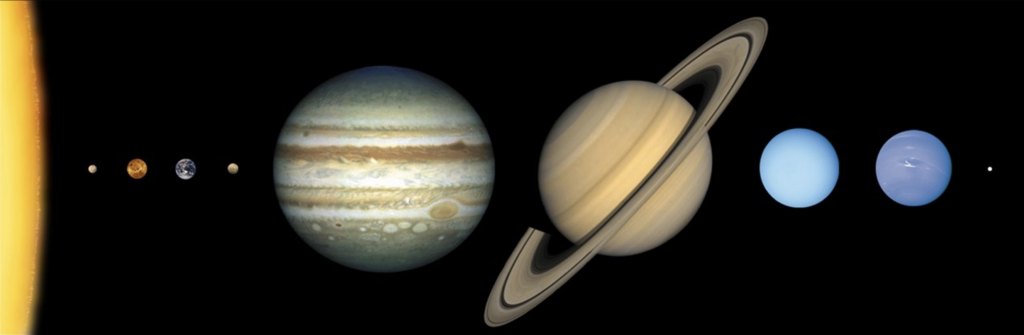
True Celestial Proportions

Figure 2
Solar System Sizes Lineup
Note. From Solar System Sizes [Digital image], by NASA Science, 2023, NASA Solar System Exploration (nasa.gov). In the public domain.

While analyzing this design individually (no other members in my pod), my framework directly contrasts with some of the alternative models researched by peers in other pods. For instance, in the “Solving for Why” Blog Post, a classmate analyzed why direct instruction falls short when teaching spatial and algebraic reasoning, noting that static lectures fail to help students make meaningful connections (Anugraheni et al., 2025). This directly supports my choice of experiential learning; and as Sasha highlighted in her peer post, students must actively create meaning from their own experiences rather than passively receiving procedures. By prioritizing interactive media over static lectures, this module meets the multiple means of representation prioritized in the EDCI 335 Learning Design I framework for universal design, fostering critical spatial reasoning for all learners (EDCI 335, 2023a).

Collaborative Learning in Action

Figure 3
Middle School Astronomy Activities
Note. From Unveiling the Wonders of Space: 5 Astronomy Activities for Middle Schoolers [Photograph], by National STEM Honor Society, 2023, NSTEM (nstem.org). Copyright 2023 by National STEM Honor Society.

References

Anugraheni, I., Gufron, A., & Purnomo, Y. W. (2025). The impact of realistic problem-based learning on mathematical connection abilities: Evidence from elementary schools in Indonesia. Cogent Education, 12(1). doi.org

Baybars, M. G. (2018). Middle school students’ misconceptions about the concepts of astronomy: A developmental comparison. International Education Studies, 11(11), 34-46. ed.gov

British Columbia Ministry of Education and Child Care. (2016a). Mathematics 6 & 7: Curricular competencies and content. BC Curricula. gov.bc.ca

British Columbia Ministry of Education and Child Care. (2016b). Science 6: Curricular competencies and content. BC Curricula. gov.bc.ca

Coştu, F., Özdemir, N. F., & Coştu, B. (2022). Revealing middle school students’ understanding of the universe: Alternative conceptions of scale and size. Journal of Education in Science, Environmental and Health, 8(4), 312-326. ed.gov

Department of Physics and Astronomy at Douglas College & OpenStax. (2017). Douglas College Astronomy 1105. BCcampus Open Education. bccampus.ca

EDCI 335. (2023a). Learning Design I: Universal design for learning. Learning Design for Technology-Mediated Environments. edtechuvic.ca

EDCI 335. (2023b). Learning, motivation, and theory: Learning theories. Learning Design for Technology-Mediated Environments. edtechuvic.ca

Krawec, J. (2014). Improving middle school students’ geometry problem solving and spatial reasoning through integrated curriculum modules. Journal of Cognitive Psychology, 26(4), 415-430. doi.org

Merrill, M. D. (2018). Using the First Principles of Instruction to make instruction effective, efficient, and engaging. In R. E. West (Ed.), Foundations of learning and instructional design technology (1st ed., pp. 265-275). EdTech Books. edtechbooks.org

NASA Science. (2023). Solar system sizes [Digital image]. NASA Solar System Exploration. nasa.gov

National STEM Honor Society. (2023). Unveiling the wonders of space: 5 astronomy activities for middle schoolers [Photograph]. NSTEM. nstem.org

Price, A., Lee, H., Malatesta, K., & SubbaRao, M. (2017). Learning about the scale of the solar system using digital planetarium visualizations and physical scaling. American Journal of Physics, 85(7), 550-559. doi.org

Vancouver Island Travel. (2013). Greater Victoria map [Map]. VancouverIsland.com. vancouverisland.com